White uncoated labels offer a bright white, uncoated paper surface for mailing, office organization and everyday product packaging. With permanent adhesive and a plain-paper appearance, they are an economical choice when you want clear text, barcodes or simple color designs without a glossy finish.
Shop white uncoated sheet labels | Find label templates
White uncoated paper labels for everyday uses
The uncoated finish has a familiar paper feel and a low-glare appearance. Choose a size and shape that fit the usable area of your envelope, folder or package. These white uncoated sheets can be printed with compatible inkjet and laser printers; always follow your printer's label-media instructions.
- Mailing and return addresses: organize outgoing envelopes and parcels.
- Office and filing: identify folders, storage boxes and records.
- Inventory: print item names, stock numbers and barcodes for dry indoor use.
- Product packaging: add simple branding to cartons, paper bags and other suitable dry surfaces.
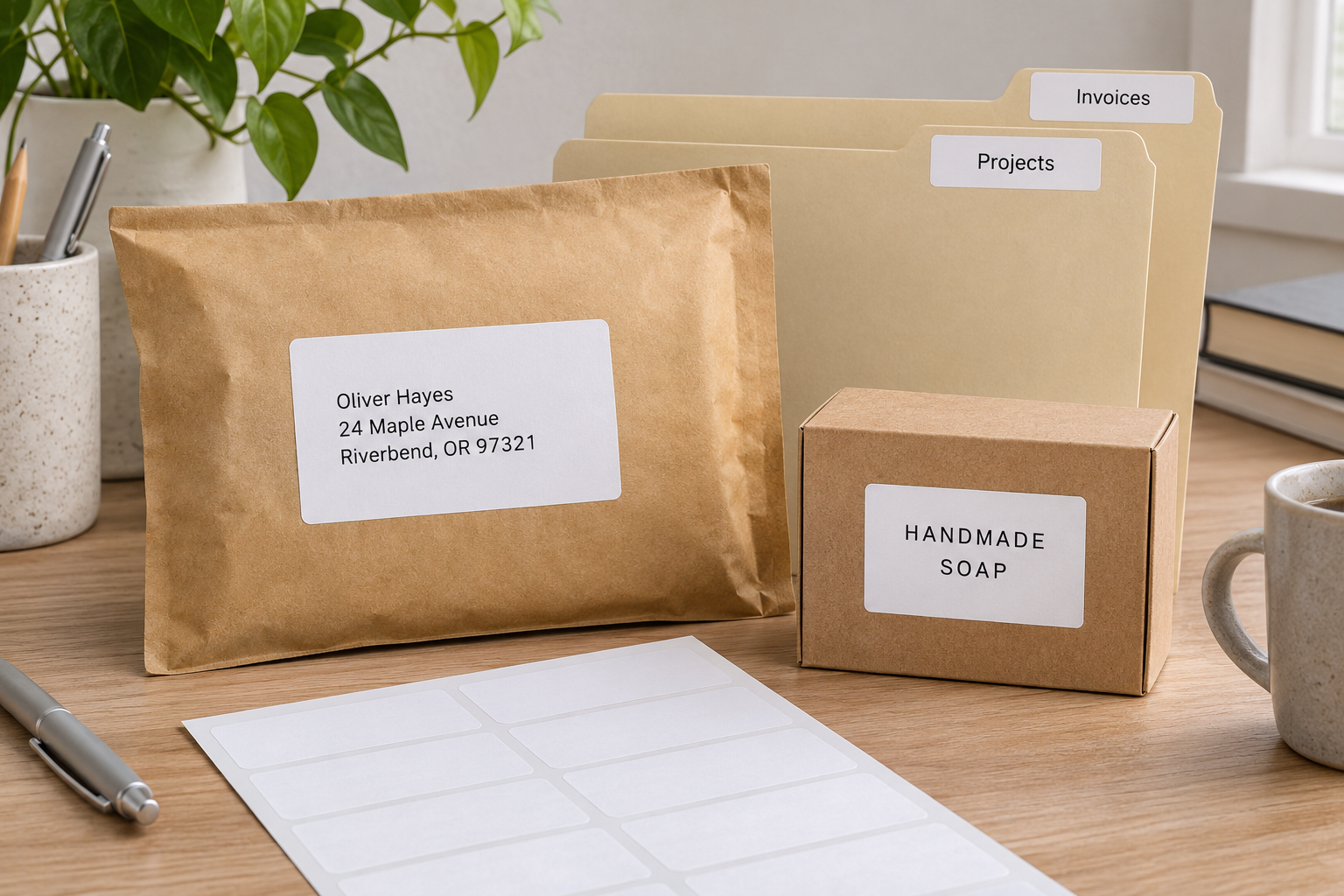
Actual white uncoated label photos
Use these original product photos to see examples of the white paper material and sheet presentation. Select the specific product listing for its dimensions and layout.


Choose this material for dry applications
Standard white uncoated paper is not waterproof. It is best suited to applications where the label stays dry. Water, condensation, oils and repeated rubbing can affect the paper or print. For demanding conditions, compare a suitable synthetic material and confirm that it matches your printing method.
The permanent adhesive is intended to stay in place rather than peel away cleanly. Test adhesion on your actual surface, especially textured, coated or curved packaging. Apply labels to clean, dry surfaces before evaluating the finished result.
Print and apply with confidence
- Select the exact label size and download its matching template.
- Keep important text and barcodes away from the cut edges.
- Print a plain-paper alignment test at 100% or Actual Size, with scaling turned off.
- Use the label-media settings recommended by your printer manufacturer. Let ink dry before handling.
- Test the printed label on the finished package before a larger production run.
Find the right white label for your project
Browse white uncoated label sizes and shapes, or download a matching label template. For help choosing a material, contact our team.
Frequently asked questions
What are white uncoated labels?
They are bright white paper labels with an uncoated surface and permanent adhesive. They provide a simple, economical finish for everyday indoor labeling.
Can I print these labels with an inkjet or laser printer?
The white uncoated sheet labels linked on this page are compatible with inkjet and laser printers. Use the exact size template and confirm that your printer accepts label sheets.
Are white uncoated paper labels waterproof?
No. Standard uncoated paper labels are intended for dry applications. For exposure to water, condensation or oils, choose an appropriate film material and test the complete printed label.
Will permanent adhesive work on every surface?
Adhesion depends on the surface and conditions. Apply to a clean, dry surface and test your actual container or package before ordering a larger quantity. Permanent labels are not intended for clean removal.
How do I avoid printing out of alignment?
Match the template to the exact label layout, print at 100% or Actual Size, turn off Fit to Page, and test on plain paper before loading a label sheet.
Can I use these labels on products?
Yes, they can suit dry product packaging such as cartons and paper bags. Test adhesion, print quality and handling on your finished package; choose another material when moisture or abrasion resistance is important.