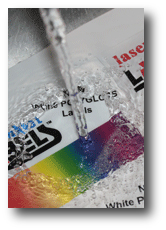
White PolyGloss gives product packaging a glossy white synthetic label surface for color artwork, logos and readable information. It can be considered for bottles, jars and other containers when the selected material and adhesive fit the application. The appearance of the face material is only one part of choosing a label: printer compatibility, surface shape and exposure also matter.
Use this guide to review the available format and application checks before ordering. Confirm the specific product is intended for your printing method, since sheet and roll materials can have different coatings and media requirements. Test the finished print and adhesive on your actual container, including any moisture, rubbing or other conditions the package will face.
View White PolyGloss Sheet Label Sizes | Request Samples
Choose PolyGloss for Your Printing Setup
Choose the format and material specified for your printer. Sheet and roll products can have different coatings, ink requirements and media configurations. Check the individual product details before printing rather than relying on the PolyGloss name alone.
Glossy finish
A white glossy background can suit color graphics and readable product information. Test your artwork and print settings on the selected stock.
Moisture-prone packaging
Suitable synthetic film can be an alternative to paper around condensation and splashes. Test the finished label, including the print and adhesive, under actual use conditions.
Container fit
Measure the smooth label panel and test the size on the actual bottle, jar, tube or package. Curves, seams and surface coatings can affect fit and adhesion.
Handling and storage
Evaluate print rub, edge lift and appearance through the expected storage and handling cycle. Confirm any specific temperature or outdoor requirements against product specifications.
Understand Water Resistance
The face material is only one part of label performance. Ink or toner adhesion, drying, adhesive, container surface and exposure time all affect the finished result. Moisture resistance does not guarantee resistance to soaking, dishwasher cycles, oils, alcohol, chemicals or long-term sunlight.
For refrigerated products, bath packaging, sauces or other moisture-prone uses, request samples and test the complete label under the actual conditions. See our waterproof and water-resistant label guide for a broader comparison.
Compare Film and Paper
Paper can be a practical choice for dry indoor packaging. A suitable film can provide better moisture resistance, but neither construction guarantees a particular lifespan or adhesive performance on every surface. Select by the printer, package and expected exposure rather than finish alone.
Print and Apply a Test Batch
- Choose the exact size and format for your printer.
- Use a matching label template and check alignment with a paper test at actual size.
- Follow the printer and material instructions for media settings and drying.
- Apply to clean, dry containers within the adhesive’s recommended conditions.
- Allow the bond to develop, then test the finished label before production.

Frequently Asked Questions
What are White PolyGloss labels?
White PolyGloss is a glossy synthetic label option. Review the selected product’s material, format and printer compatibility before ordering.
Are PolyGloss labels waterproof?
A suitable synthetic material can offer better moisture resistance than paper, but the finished label also depends on the ink or toner, adhesive and exposure. Test the complete printed label under your actual conditions.
Can I use PolyGloss in any inkjet or laser printer?
Do not assume every format is interchangeable. Check the selected sheet or roll product’s printer compatibility, ink requirements and media specifications, then test samples in your exact printer.
Are PolyGloss labels resistant to oils and chemicals?
Water resistance does not establish resistance to oils, alcohol, cleaning products or other chemicals. Test the finished print, face material and adhesive with the actual formula and exposure conditions.
How do I apply and test the labels?
Apply to a clean, dry surface within the selected adhesive’s recommended conditions. Allow the bond to develop, then test the label through the expected handling, storage and moisture exposure.