Shop warehouse and logistics labels for rack locations, inventory, picking bins, reusable totes, and shipping cartons. Print changing information in-house on blank sheets or inkjet rolls, or order custom printed rolls for repeat artwork and fixed identification.
Shop Warehouse and Logistics Labels
Shop Blank Sheets | Shop Blank Inkjet Rolls | Explore Custom Printed Labels | Request Samples
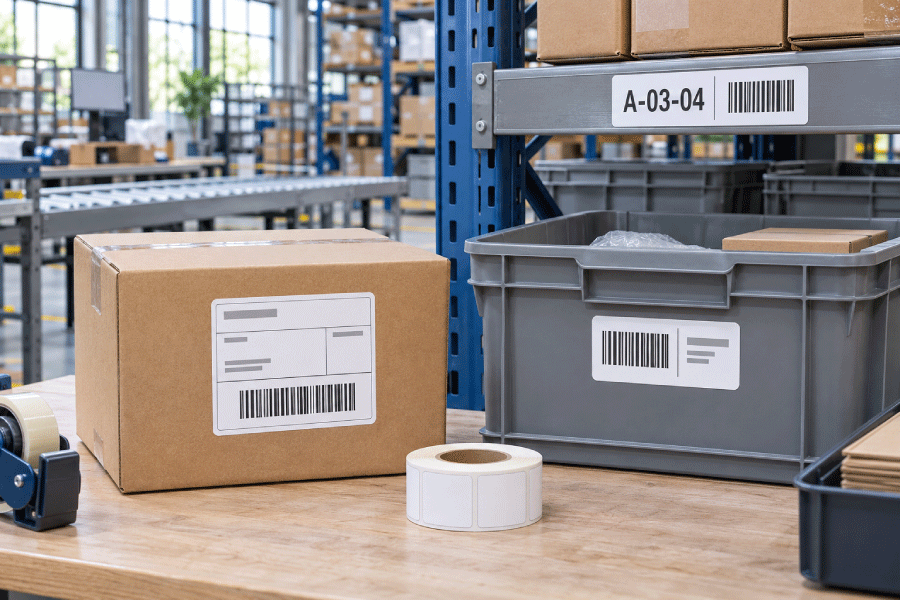
Choose Labels by Warehouse Task
| Task | What to label | What to check |
|---|---|---|
| Receiving and inventory | Cartons, totes, and items with an SKU, lot number, or barcode. | Keep the identifier visible when items are stacked or shelved. |
| Storage and picking | Rack beams, shelf edges, and bins with a consistent location code. | Check that workers can read or scan the code from the normal picking position. |
| Reusable totes | Container ID or changing route and staging information. | Test adhesion and removal on the tote plastic after the expected dwell time. |
| Packing and shipping | Outbound cartons with carrier labels, return information, or internal routing codes. | Use the size your shipping software requires. Apply the label to a flat panel away from seams and corners. |
Common Sizes for Inventory and Shipping Labels
- Small item and bin IDs: Try 2″ × 1″ when the surface and barcode layout allow it.
- Carton or shelf identification: Try 2″ × 4″ when you need space for an SKU and a readable description.
- Carrier shipping labels: 4″ × 6″ is a common format. Check your carrier and software settings before choosing the stock.
Use the sheet template for your exact layout or see the shipping box label size guide for more examples.
Match the Format and Material to Your Workflow
- Blank sheets: Use printer-compatible laser or inkjet sheets for short runs and changing data. White Uncoated paper is an everyday option for dry cartons and indoor labels.
- Blank inkjet rolls: Use compatible roll stock for frequent in-house printing. Check width across the roll, length into the roll, core size, outside diameter, and sensor requirements.
- Custom printed rolls: Choose these for recurring artwork or fixed instructions. Provide your artwork, quantity, surface, and exposure when requesting a quote.
- Film or removable stock: Test printer-compatible film labels for moisture and frequent handling. Test removable labels where the ID changes.
Test Barcode Scanning Before a Full Run
Print a sample at actual size and apply it to the real carton, tote, or rack. Keep the clear space around the barcode and scan it at the distance and angle used on the floor. For refrigerated or high-handling areas, repeat the check after the label has been exposed to those conditions. See our barcode labels guide for more options.
Frequently Asked Questions
What labels do I need for warehouse logistics?
Use location labels for racks and bins, inventory labels for items or totes, and shipping labels for outbound cartons. Choose each label for the surface, expected handling, and how workers will read or scan it.
What size label should I use for a shipping carton?
Use the dimensions required by your shipping software and carrier. A 4″ × 6″ label is a common starting point when your system supports it. Print at actual size and confirm the barcode scans.
Can I print warehouse barcode labels in-house?
Yes. Choose blank sheets rated for your desktop laser or inkjet printer or rolls made for your inkjet roll label printer. Test the printed barcode with your scanner at the distance and angle used in your workflow.
What material should I use for reusable totes or cold storage?
Test a removable adhesive on reusable totes when you need to change IDs. For cold storage or condensation, use a stock and adhesive rated for the application temperature and storage conditions.
Can I order custom printed logistics labels?
Yes. Custom printed rolls can be used for repeat artwork, fixed instructions, or branding. Send your dimensions, quantity, surface, and exposure details when requesting a quote.