White semi-gloss inkjet labels give product packaging a coated paper finish with a subtle sheen. Choose them when you want more shine than white uncoated paper while keeping the flexibility to print your own designs with a compatible inkjet printer. The material has permanent adhesive and is available in a wide range of sheet-label sizes and shapes.
Shop white semi-gloss inkjet labels | Find a matching label template | Ask about samples
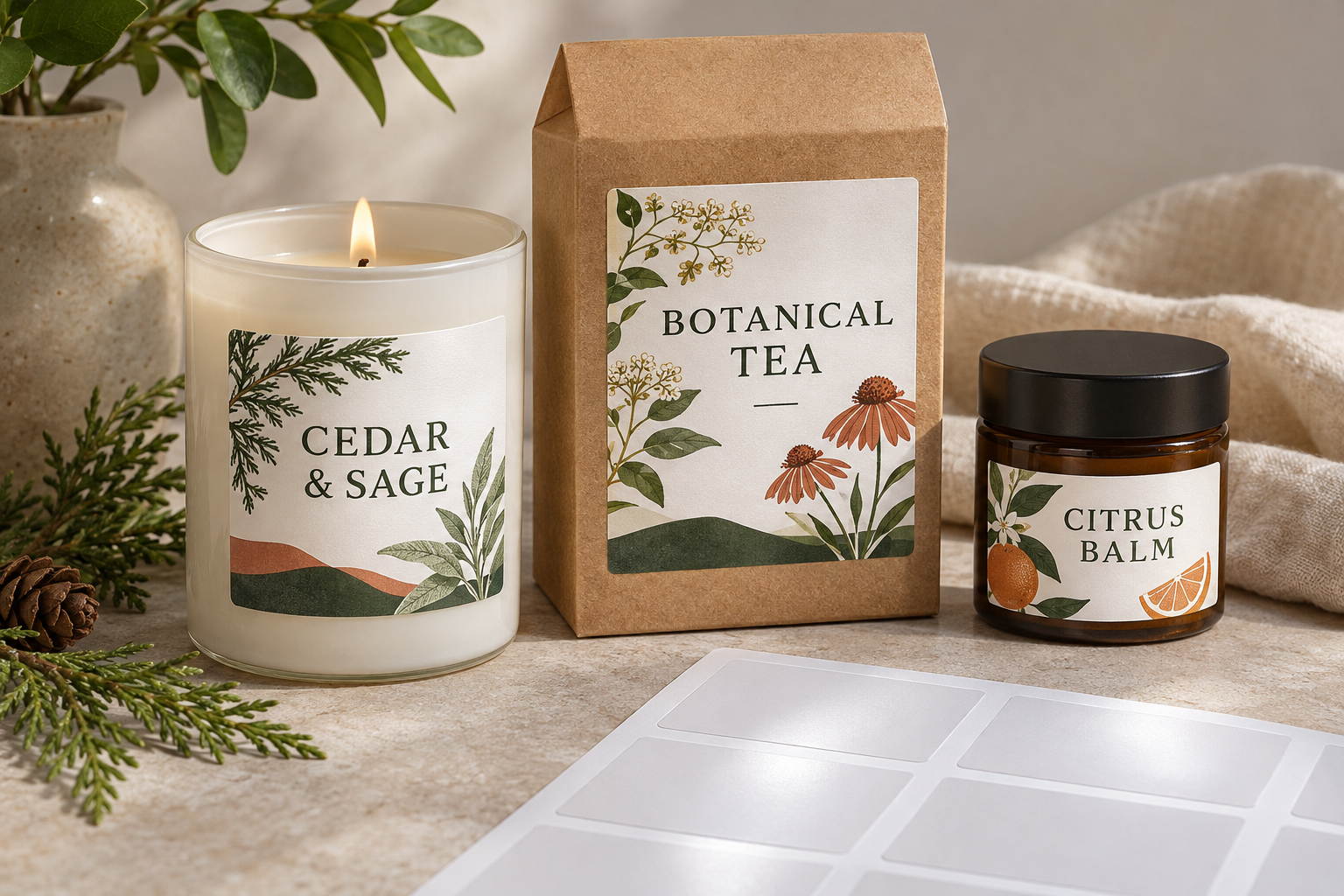
Is semi-gloss inkjet paper right for your project?
The white coated surface can suit colorful logos, product names and detailed graphics. The finished appearance depends on your artwork, printer, ink and settings. Compare a printed sample under the lighting where your product will be displayed, especially when your design includes fine text or a barcode.
- Retail cartons and paper packaging: add branding to dry product boxes, bags and gift packaging.
- Jar and bottle labels: identify products stored and handled in dry conditions, after checking fit and adhesion on the actual container.
- Candle and craft packaging: print scent names, product information and small-batch designs.
- Promotional and inventory labels: combine color graphics with text, item numbers or scannable codes.
Consider the complete use environment before choosing a paper label. A beverage bottle exposed to condensation or a bathroom container handled with wet hands may need a different material, even when semi-gloss looks right for the design.
Compare the finishes and printer requirements
| Material | Appearance | What to check |
|---|---|---|
| White uncoated paper | Plain-paper appearance without a glossy coating. | A practical choice for mailing, filing and dry everyday packaging. |
| White semi-gloss inkjet paper | Coated white surface with some sheen. | Use inkjet-compatible stock and test your printer, ink and artwork together. |
| White semi-gloss laser paper | A separate semi-gloss material intended for laser printing. | Choose the laser version when using a laser printer. |
Finish names describe appearance, not a guarantee of waterproofing or print durability. There is no universal sheen percentage that you should use to judge the final printed label.
Choose a size, shape and pack quantity
Browse circles, ovals, rectangles and squares in the white semi-gloss inkjet sheet-label category. Both 50- and 100-sheet options are listed; confirm the quantity and layout on the individual product you select.
Measure the smooth, usable area of the package rather than relying on container capacity. Cut a paper test label at the intended dimensions and check that it stays clear of curves, seams, folds and closures. For a wrap label, check the seam position and leave the gap or overlap your design requires.
Printing tips for semi-gloss inkjet sheets
- Match the template. Select the file for the exact label size and sheet layout, not just a similar shape.
- Check alignment first. Print on plain paper at 100% or Actual Size. Turn off automatic page scaling and compare the test with the label sheet.
- Test the media setting. Follow your printer manufacturer's coated-media guidance and compare a few settings if necessary. The highest ink setting is not automatically the best choice.
- Let the ink dry. Check the printed surface before touching, stacking or applying labels. Drying time varies with ink coverage and your printing setup.
- Keep detail readable. Leave space around cut edges and test barcodes with the scanner that will be used. Only add bleed where the sheet layout and template support it.
Adhesion, handling and moisture
Apply labels to clean, dry surfaces with firm, even pressure. Permanent adhesive is intended to stay in place rather than remove cleanly, but adhesion still depends on the package surface and conditions. Test on coated cartons, curved containers and unfamiliar plastics before a production run.
Do not treat semi-gloss paper as a waterproof label. Check for ink transfer, paper damage and lifting edges under your actual handling and storage conditions. For water, oils or outdoor exposure, ask us about an appropriate film material and confirm compatibility with your printer.
Test before placing a larger order
A useful test includes your actual design, printer, ink and finished package. Check sheet feeding, alignment, color, drying, adhesion and readability. Ask about samples and provide your printer model and intended use so our team can help you choose what to evaluate.
Browse semi-gloss inkjet label sizes | Download templates | Contact LaserInkjetLabels.com
Frequently asked questions
Are these semi-gloss labels suitable for laser printers?
No. This page covers white semi-gloss stock formulated for inkjet printing. For a laser printer, choose the separate semi-gloss laser material.
What is the difference between uncoated and semi-gloss labels?
White uncoated labels have a plain-paper appearance. Semi-gloss inkjet labels have a coated white paper surface with some sheen. Choose based on the look you want and test the printed result.
Are semi-gloss inkjet labels waterproof?
Do not assume a semi-gloss paper label is waterproof. Test the paper, printed ink and adhesive under the conditions your package will encounter. For wet environments, ask about a suitable film label made for your printer.
Should I use pigment or dye ink?
Use ink approved for your printer and test it on this label stock. The result depends on the printer, ink formulation, media setting and artwork; ink type alone does not guarantee compatibility or water resistance.
Which printer settings should I use?
Start with your printer manufacturer's recommendations for coated label media. Test media and quality settings on a small batch. Print at 100% or Actual Size and turn off Fit to Page.
What pack sizes and shapes are available?
The linked sheet-label category includes 50- and 100-sheet options across circles, ovals, rectangles and squares. Check the selected product for its exact size, layout and quantity.
Can I request samples before ordering?
Contact our team to ask about sample availability. Include your printer model, ink type, desired label size, application surface and expected exposure so you can test the relevant material.