Choosing the correct vape bottle label size helps your packaging look professional, keeps important information readable and reduces problems such as wrinkling, lifting or excessive overlap. The best size depends on the bottle’s diameter, height, shape and available smooth labeling area.
This guide provides starting recommendations for common 10 ml, 15 ml, 30 ml, 60 ml, 100 ml and 120 ml vape bottles. It also explains how to measure the actual container, compare label materials and choose between blank sheet labels, roll labels and professionally printed labels.
Important: Always Measure Your Actual Bottle
Vape bottles from different manufacturers can have different diameters, shoulders, caps and usable labeling areas even when they hold the same number of milliliters. Treat the sizes in this guide as starting points and test a paper mockup or label sample on the exact bottle you plan to use.
Quick Navigation
Quick Answer: Recommended Vape Bottle Label Sizes
The following dimensions are common starting points for straight-sided vape and e-liquid bottles. The correct label may be smaller if the bottle has tapered shoulders, pronounced curves, ridges or limited space beneath the cap.
| Bottle Capacity | Suggested Starting Size | Common Label Style | Typical Use |
|---|---|---|---|
| 10 ml | Approximately 1.5″ × 2″ | Small front label or partial wrap | Sample bottles, flavor testing and compact e-liquid containers |
| 15 ml | Approximately 1.75″ × 2.25″ | Front label or partial wrap | Small dropper bottles and compact retail packaging |
| 30 ml | Approximately 2″ × 3″ | Front label, partial wrap or front-and-back set | Nicotine salts, CBD oils and standard small e-liquid bottles |
| 60 ml | Approximately 2.5″ × 4″ | Large front label or partial wrap | Common retail vape juice and short-fill bottles |
| 100 ml | Approximately 3″ × 5″ | Partial wrap or large front label | Large-capacity e-liquid and short-fill bottles |
| 120 ml | Approximately 3″ × 6″ | Partial wrap or extended front label | Large retail bottles requiring more branding and information space |
For additional bottle-specific recommendations, visit our vape bottle label size guide.
Recommended Label Sizes by Vape Bottle Capacity
10 ml Vape Bottle Labels
A 10 ml vape bottle has limited labeling space, so the label must communicate the most important information without overwhelming the container. A label near 1.5″ × 2″ may work as a small front panel or partial wrap on many straight-sided bottles.
Prioritize the brand name, flavor or variety, capacity and the most important required information. Additional details may need to appear on a small back label, outer carton or accompanying package.
15 ml Vape Bottle Labels
Many 15 ml bottles provide slightly more width and height than 10 ml containers. A starting size near 1.75″ × 2.25″ may offer enough room for a product name, flavor, logo, volume and basic directions.
Because many 15 ml bottles narrow near the shoulder, measure only the straight-sided area beneath the shoulder and above the base curve.
30 ml Vape Bottle Labels
The 30 ml bottle is common for nicotine salts, CBD oils and other concentrated products. A 2″ × 3″ rectangle is a practical starting point for many 30 ml containers, but bottle style matters.
A wide chubby gorilla bottle may support a broader wrap, while a narrow glass dropper bottle may require a smaller front label or a tall, narrow rectangle. Do not select a size based on capacity alone.
60 ml Vape Bottle Labels
A 60 ml container generally provides enough surface area for more detailed branding. A label near 2.5″ × 4″ may work well as a large front panel or partial wrap on many bottles.
This size can provide room for the brand, flavor, product description, volume, warnings, manufacturer information, ingredients, barcode and QR code. Review all applicable regulations before finalizing artwork.
100 ml Vape Bottle Labels
Large 100 ml bottles often use labels around 3″ × 5″, depending on the usable circumference and height. This format provides more design flexibility but should still avoid the bottle’s shoulder and lower curve.
Test how the artwork looks when the bottle is viewed from the front. A wide label may wrap farther around the sides than expected, moving important text away from the primary viewing area.
120 ml Vape Bottle Labels
A starting size near 3″ × 6″ may be suitable for many 120 ml bottles. However, long labels require careful application because even a small alignment error becomes more noticeable as the label wraps around the container.
A shorter partial-wrap label may sometimes produce a cleaner result than attempting a nearly complete wrap.
How to Measure a Vape Bottle for a Label
Accurate measurement is more important than the stated bottle capacity. Two bottles can both hold 60 ml while having different diameters, heights and usable labeling areas.
Five-Step Measuring Method
- Identify the smooth, straight-sided area. Do not include the cap, shoulder, neck, lower curve, ridges or recessed areas.
- Measure the usable label height. Leave a small margin above and below the proposed label.
- Measure the circumference. Wrap a flexible measuring tape or strip of paper around the bottle’s straight-sided section.
- Decide how much of the bottle to cover. Choose a front label, partial wrap, nearly full wrap or separate front-and-back labels.
- Create a paper mockup. Cut plain paper to the proposed dimensions and tape it temporarily to the bottle.
How to Measure the Bottle Circumference
Wrap a flexible tape measure around the bottle at the location where the label will be applied. If you do not have a flexible tape, wrap a narrow strip of paper around the bottle, mark where the ends meet and measure the paper with a ruler.
For a partial-wrap label, select a width smaller than the full circumference. Leaving an uncovered gap can make application easier and prevent the label edges from overlapping.
How Much Uncovered Space Should You Leave?
There is no single required gap, but leaving approximately 1/8″ to 1/4″ of uncovered space between the ends of a wrap label can make placement more forgiving. Bottles with severe curves may require a larger uncovered area.
Test with an Actual Label Sample
A paper mockup confirms general size, but an actual sample confirms adhesive performance, flexibility, print quality and resistance to handling. Test the proposed material on a clean bottle under normal filling, storage and shipping conditions.
Front Labels, Wrap Labels or Front-and-Back Labels?
Front Labels
A front label covers only the main viewing area. It is easy to apply and keeps the bottle visible, but provides limited room for ingredients, warnings and other information.
Partial-Wrap Labels
A partial-wrap label covers most of the bottle without meeting at the back. It provides more printable space while reducing the risk of overlap.
Front-and-Back Labels
Separate labels allow the front to focus on branding while the back displays ingredients, warnings, directions, barcodes and manufacturer details.
Nearly Full-Wrap Labels
A wide label offers maximum space but requires accurate measuring and application. Leave a small gap to avoid overlap unless the packaging is specifically designed for it.
Best Label Materials for Vape Bottles
Vape and e-liquid bottles may be exposed to oils, moisture, frequent handling, temperature changes and product residue. Material choice should reflect the actual storage and use conditions.
| Material | Appearance | Best Environment | Important Consideration |
|---|---|---|---|
| White Matte | Clean, non-reflective and easy to read | Dry indoor packaging | Paper material is not intended for significant moisture exposure |
| White Gloss | Smooth and polished with vibrant colors | Retail bottles stored in dry conditions | Confirm printer compatibility before ordering |
| Clear | Minimal no-label appearance | Clear glass or plastic bottles | Clear materials are not automatically waterproof |
| Kraft | Natural and handcrafted | Dry specialty or artisan packaging | Paper kraft labels should be kept away from moisture and product residue |
| Synthetic Poly | Durable and professional | Moisture-prone and frequently handled bottles | Printed ink durability depends on the material, printer and ink system |
Learn more about durable materials on our waterproof and water-resistant labels page.
Test for Oils and Product Residue
A material that performs well against water may react differently to oils, flavoring ingredients or e-liquid residue. Test the printed label with the actual filled product before committing to a larger quantity.
Should You Use Sheet Labels or Roll Labels?
Both formats can produce professional vape bottle labels. The best choice depends on your printer, production volume, number of designs and application method.
| Feature | Sheet Labels | Roll Labels |
|---|---|---|
| Best volume | Small batches and multiple designs | Regular and higher-volume production |
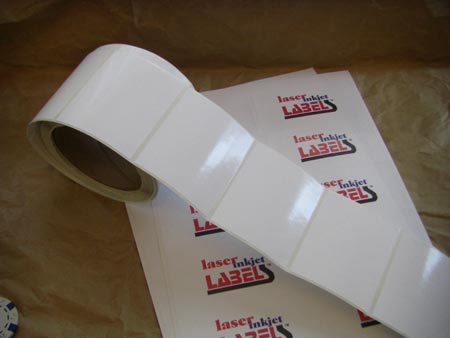
| Printer | Compatible desktop laser or inkjet printer | Compatible Epson, Primera or Afinia inkjet roll-label printer |
| Application | Usually applied by hand | Applied by hand, dispenser or compatible applicator |
| Design changes | Convenient for short runs and frequent changes | Efficient for recurring production and variable data |
| Initial investment | Lower if a suitable desktop printer is already available | Requires a dedicated compatible roll-label printer |
Printing Vape Bottle Labels
Desktop Inkjet Printing
Desktop inkjet printers are useful for colorful short runs, prototypes and businesses producing several flavor varieties. Use materials specifically designed for inkjet printing and allow printed sheets to dry before handling or application.
Desktop Laser Printing
Laser printers produce crisp text, barcodes and graphics with toner. Use laser-compatible sheet labels designed to withstand the heat and pressure of the fusing process.
Inkjet Roll-Label Printers
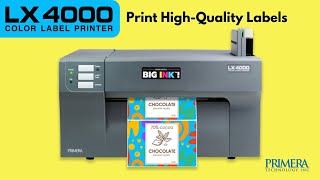
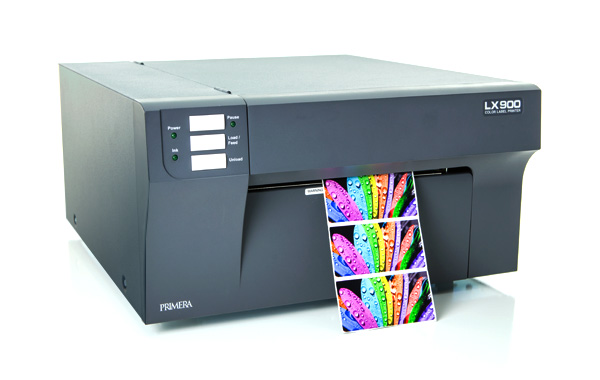
Compatible Epson ColorWorks, Primera and Afinia printers can print pre-cut roll labels in sequence. This format is useful for regular production, multiple SKUs, barcodes, lot numbers and variable product information.
Before ordering, confirm the required label width, direction, core size, maximum outside roll diameter and sensing method. Visit our inkjet roll-label printer compatibility guide for additional information.
Professionally Printed Labels
Custom printed labels are supplied ready to apply and eliminate the need to purchase a printer, maintain ink inventory or dedicate staff time to production. They may be the better option for established designs and recurring production runs.
What Information Should Appear on a Vape Bottle Label?
The information required on a vape or e-liquid bottle may vary by product type, ingredients, jurisdiction, distribution channel and applicable regulations. Verify current requirements with the appropriate regulatory authority or qualified adviser.
Common label elements may include:
- Brand and product name
- Flavor or variety
- Net contents
- Ingredient statement
- Nicotine concentration or other relevant product information
- Applicable warnings
- Manufacturer or distributor information
- Lot, batch or production code
- Barcode or SKU
- QR code
- Website or customer-service information
- Storage or handling instructions
Keep critical text away from rounded corners, edges and the portion of the label that wraps farthest around the back of the bottle.
Common Vape Bottle Label Mistakes
| Mistake | Possible Result | Better Approach |
|---|---|---|
| Choosing by capacity alone | The recommended size may not fit a differently shaped bottle | Measure the actual container |
| Covering the bottle shoulder | Wrinkles, bubbles or lifting edges | Keep the label within the straight-sided area |
| Making a wrap label too wide | Edges overlap or important information moves out of view | Leave a small uncovered gap |
| Using incompatible material | Smearing, poor toner adhesion or feeding problems | Match the label material to the printer technology |
| Applying labels to oily bottles | Reduced adhesive contact and lifting | Clean and dry the bottle before application |
| Skipping product testing | Unexpected reactions to oils, residue or storage conditions | Test the complete printed label with the actual filled product |
Vape Bottle Label Buying Guide
Step 1: Identify the Bottle
Record the bottle capacity, material, diameter, circumference, usable height and shape. Note whether it has straight sides, tapered shoulders or molded ridges.
Step 2: Choose the Label Style
Decide whether you need a front label, front-and-back set, partial wrap or nearly full wrap. Consider how much information must fit on the bottle.
Step 3: Select the Material
Choose a material based on moisture, oil exposure, handling, storage temperature, desired finish and printer compatibility.
Step 4: Select Sheets, Rolls or Custom Printing
Use sheet labels for smaller batches and desktop printing, roll labels for dedicated label printers and recurring production, or professionally printed labels when you want finished labels supplied ready to apply.
Step 5: Test Before Ordering
Print a paper mockup, request samples and test the proposed material on the actual bottle. Confirm the label fits, adheres properly and remains readable after filling, storage and handling.
Explore Vape Bottle Labels
Compare blank sheet labels, blank roll labels, materials and custom printed options for vape bottles, e-liquid packaging and related containers.
Shop and Learn About Vape Bottle LabelsFrequently Asked Questions About Vape Bottle Label Sizes
What size label fits a 30 ml vape bottle?
A 2″ × 3″ rectangle is a common starting point for many 30 ml vape bottles. Measure the actual bottle because glass dropper bottles, cylindrical bottles and chubby gorilla bottles can have different usable labeling areas.
What size label fits a 60 ml vape bottle?
A label near 2.5″ × 4″ may fit many 60 ml bottles as a large front panel or partial wrap. The correct size depends on the bottle circumference, shoulder and available straight-sided height.
What size label fits a 100 ml vape bottle?
A 3″ × 5″ label is a useful starting point for many 100 ml bottles. Test a paper mockup because some bottles are wider, shorter or more tapered than others.
Should a vape bottle label wrap completely around the bottle?
Not necessarily. A partial-wrap label is often easier to apply and leaves a small gap between the label ends. A full or nearly full wrap provides more space but requires more precise measuring and alignment.
What material is best for vape bottle labels?
White matte and gloss paper can work well in dry conditions. Synthetic materials are often a better choice for bottles exposed to moisture, oils, residue or frequent handling. Test the material with the actual product.
Are clear vape bottle labels waterproof?
Not automatically. Clear refers to the appearance of the material, not its resistance to water. Review the specific material construction and test the printed label under actual use conditions.
Can I print vape bottle labels with a desktop printer?
Yes. Blank sheet labels are available for compatible desktop inkjet and laser printers. Make sure the label material is designed for the printer technology you use.
Can I print vape bottle labels on rolls?
Yes. Blank roll labels are available for many compatible Epson ColorWorks, Primera and Afinia inkjet roll-label printers. Verify the required width, direction, core size and maximum roll diameter before ordering.
Can vape bottle labels include barcodes and QR codes?
Yes. Leave enough blank space around the code, use strong contrast and test scanning on the curved bottle before production.
Can I request samples before ordering?
Yes. Sample testing is strongly recommended to confirm label size, print compatibility, adhesion and resistance to moisture, oil or product residue.
Find the Right Labels for Your Vape Bottles
Choose blank sheet labels, blank roll labels or custom printed labels for vape bottles, e-liquid containers, CBD oils and related product packaging.
Shop Sheet Labels Shop Roll Labels Custom Printed Labels