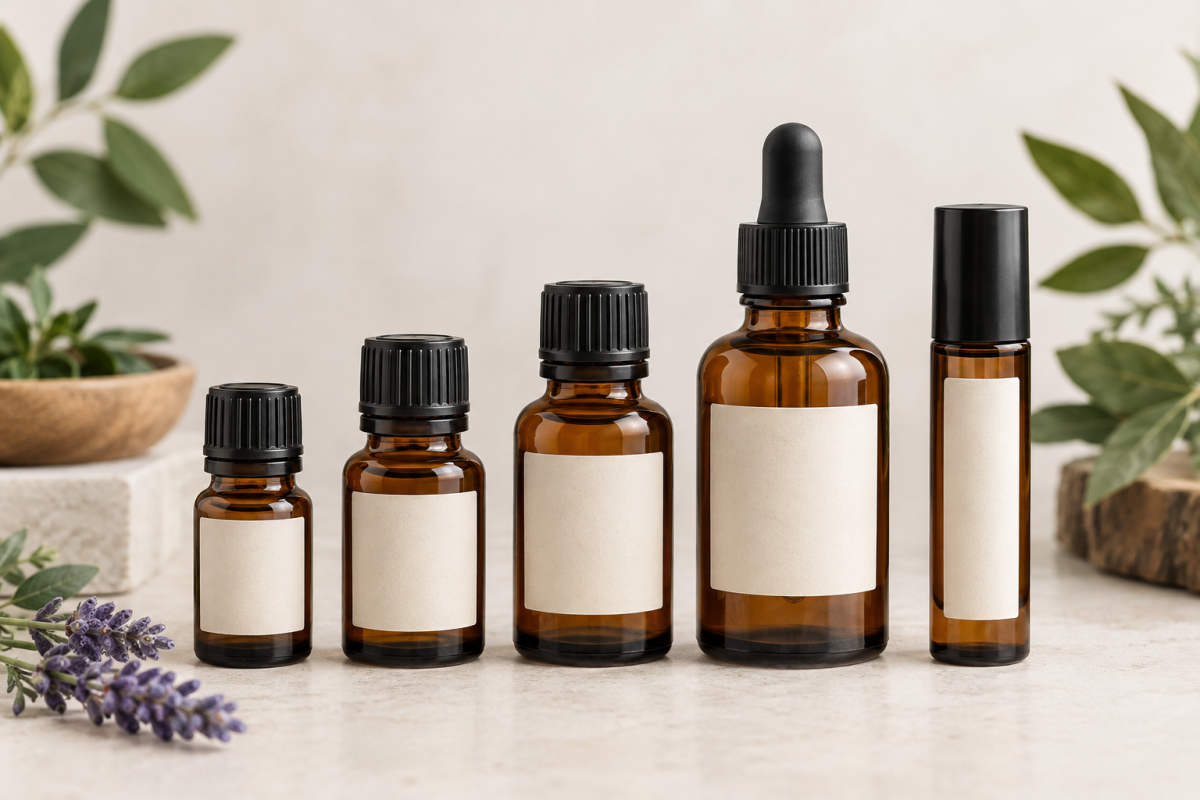
Essential oil bottles may be small, but their labels have a big job to do. A good essential oil label needs to fit a narrow bottle, remain easy to read, withstand frequent handling and provide enough room for branding and important product information.
For businesses selling essential oils, aromatherapy blends, massage oils, fragrance oils, roll-on products or private-label wellness products, choosing the right essential oil labels starts with four basic decisions:
- What label size fits the bottle?
- Which label material is appropriate for the product?
- Should you use sheet labels or roll labels?
- Will you print the labels yourself or order them professionally printed?
This guide explains each choice and helps you select a practical label for essential oil bottles ranging from small sample bottles to larger 30 mL containers and roll-ons.
Looking primarily for dimensions? Visit our Essential Oil Bottle Label Size Guide for detailed bottle-size recommendations.
Quick Guide to Choosing Essential Oil Labels
| Need | Good Starting Point |
|---|---|
| Small 5 mL bottle | Compact rectangular label |
| Standard 10 mL bottle | 1.5" × 2" is a useful starting size |
| 15 mL bottle | Slightly taller rectangular label |
| 30 mL bottle | Larger front or partial-wrap label |
| Roll-on bottle | Tall, narrow rectangular label |
| Small production runs | Sheet labels |
| Higher-volume production | Roll labels |
| Oil or moisture exposure | Appropriate durable synthetic material |
| Labels ready to apply | Custom printed labels |
Important: Bottle dimensions vary between manufacturers. Always measure the actual bottle you will use and test the proposed label size before ordering a production quantity.
Why Essential Oil Bottles Can Be Difficult to Label
Essential oil bottles create several challenges that larger containers do not.
The available labeling area is usually narrow. Bottle shoulders and bottom curves reduce the amount of flat surface available, and even a small difference in label height can determine whether a label applies smoothly or begins to wrinkle.
Essential oil labels may also need to accommodate information such as:
- Brand name
- Essential oil or blend name
- Botanical name
- Net contents
- Ingredients
- Directions
- Warnings or precautions
- Lot or batch information
- Company information
- Barcode
- QR code
Exactly what information is appropriate or required depends on the product and how it is marketed, so leave enough label space for the information your particular product needs.
What Size Label Works Best on Essential Oil Bottles?
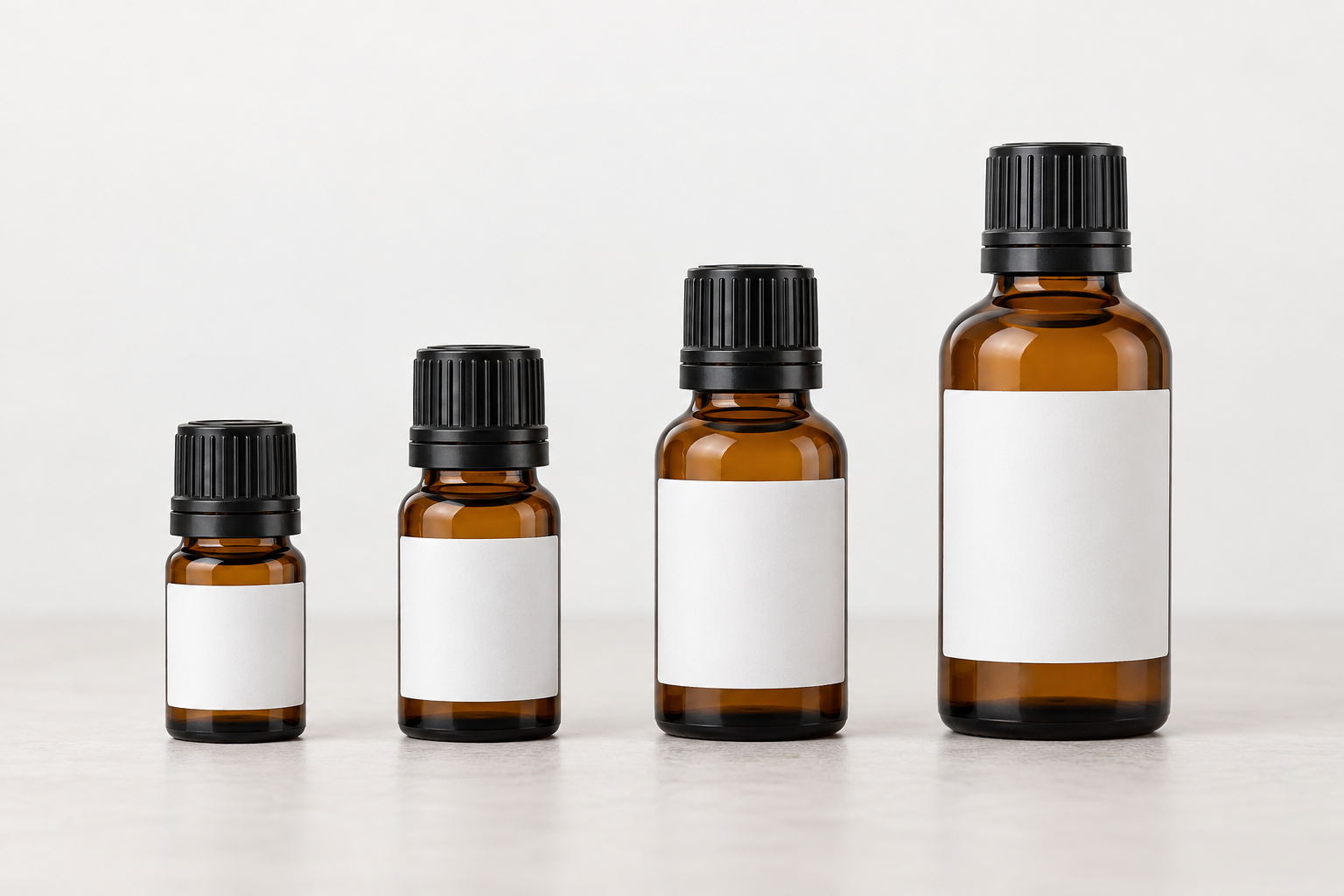
There is no single universal essential oil label size because bottle dimensions vary. However, common essential oil bottles tend to fall into several familiar capacities.
Useful starting points include:
- 5 mL bottles: approximately 1.25" × 1.5"
- 10 mL bottles: approximately 1.5" × 2"
- 15 mL bottles: approximately 1.5" × 2.25"
- 30 mL bottles: approximately 2" × 3"
- 10 mL roll-on bottles: approximately 1.25" × 2"
These are starting points, not guaranteed fits. The bottle’s straight-sided labeling area is more important than its advertised capacity.
For more size options and bottle-specific recommendations, see our Essential Oil Bottle Label Size Guide.
How to Measure an Essential Oil Bottle for a Label
Measure the actual production bottle before selecting a label.
- Find the straight-sided portion of the bottle. Avoid measuring across the curved shoulder or rounded base.
- Measure the usable label height. Leave a little space above and below the label so minor placement differences do not push the label onto a curve.
- Measure around the bottle. If you are considering a partial-wrap or near-wrap label, measure the circumference of the straight portion.
- Choose a label slightly smaller than the maximum usable area. A little extra room usually makes application easier.
- Make a paper test. Print or cut the proposed dimensions from ordinary paper and position the mockup on the actual bottle.
A slightly smaller label often applies more consistently than a label designed to use every fraction of available space.
Our free label templates can also help you test common sizes before ordering blank labels.
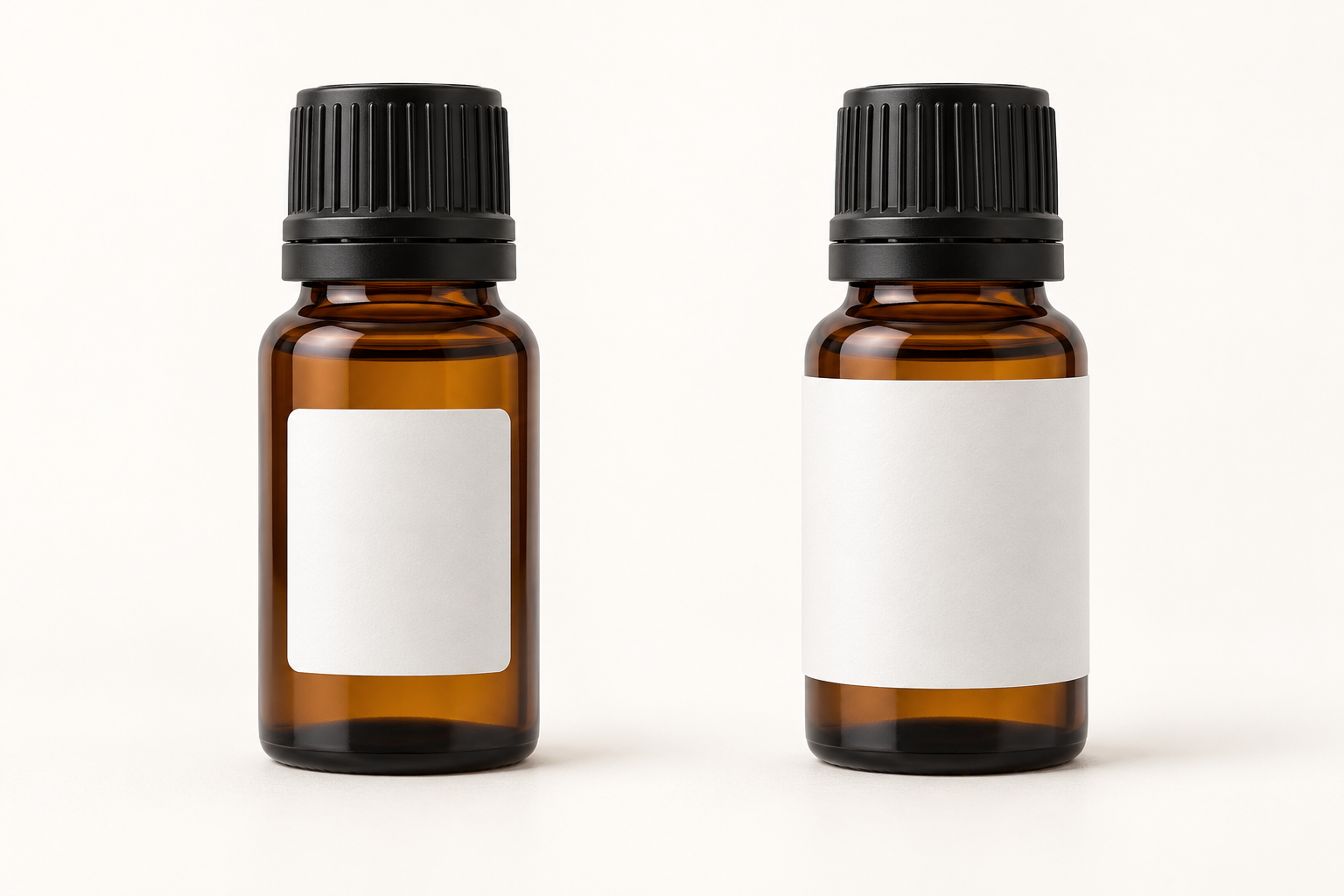
Front Labels vs. Wraparound Labels
Essential oil bottles can use a small front label, a partial-wrap design or a longer label that uses most of the bottle circumference.
Front Labels
A small front label works well when the primary goal is quick product identification.
It can display:
- Logo
- Essential oil name
- Botanical name
- Net contents
Additional information can then appear on a second back label, outer package or accompanying material where appropriate.
Partial-Wrap Labels
A longer rectangular label provides additional room for ingredients, directions, warnings and company information while still leaving some of the bottle visible.
Near-Wrap Labels
A label that uses most of the bottle circumference can maximize usable space, but leave a small gap between the ends whenever practical. Overlapping label ends can create an uneven appearance and may make application more difficult.
Choosing the Best Material for Essential Oil Labels
Material selection is particularly important for essential oil products because bottles may be exposed to oil residue, moisture and frequent handling.
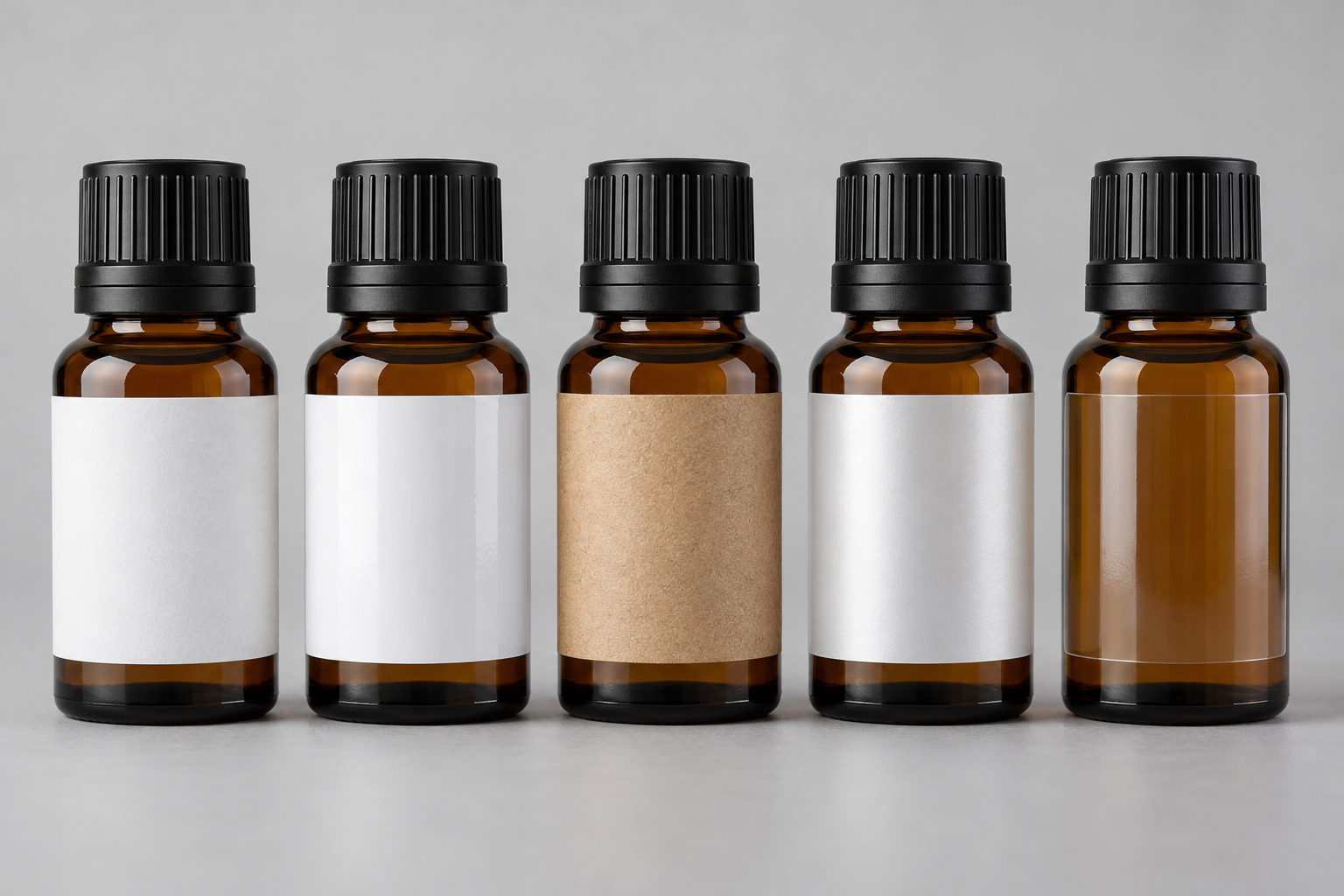
White Matte Paper
Matte paper provides a clean, natural appearance and works well for products stored in relatively dry environments.
It can be a good fit for:
- Sample bottles
- Gift sets
- Dry retail displays
- Small production runs
- Brands seeking a softer, natural appearance
Semi-Gloss Paper
Semi-gloss gives printed colors additional brightness while retaining a professional retail appearance.
It can work well for essential oils that are packaged and handled in relatively controlled environments.
Brown Kraft
Brown kraft provides a handmade, earthy appearance that complements natural or artisan branding.
Because kraft is a paper material, it should generally be kept away from repeated oil or moisture exposure unless the specific construction has been tested for that environment.
Weather-Resistant BOPP
For products likely to encounter moisture, oil residue or frequent handling, an inkjet-compatible BOPP or other appropriate synthetic material can provide additional durability.
Always test both the printed surface and adhesive with the actual filled product. An essential oil may behave differently from ordinary water exposure.
Clear Labels
Clear labels can create a minimal, premium appearance on amber, blue, green or clear glass bottles.
Important: Clear label material should not automatically be considered waterproof. Durability depends on the specific material, adhesive, printer and ink system.
For products that need greater moisture resistance, see our Waterproof and Water-Resistant Labels.
Why Oil Resistance Matters
Essential oils present a different challenge from ordinary water exposure.
A bottle may be handled after dispensing the product, allowing small amounts of oil to contact the label. Depending on the material, adhesive and printed ink, this can affect:
- Print appearance
- Adhesion
- Surface durability
- Label edges
- Smudging or abrasion resistance
For that reason, do not select a material solely because it is described as water-resistant. Test the printed label with the actual essential oil or blend you will sell.
A useful production test is to apply several printed labels to filled bottles, handle them normally for several days and expose one sample to a small amount of the actual product.
Sheet Labels vs. Roll Labels for Essential Oils
Both sheet and roll labels can produce professional essential oil packaging. The better choice depends on your printer, production volume and number of different products you sell.
| Feature | Sheet Labels | Roll Labels |
|---|---|---|
| Typical volume | Small to moderate runs | Moderate to higher-volume production |
| Printer | Compatible sheet-fed laser or inkjet printer | Compatible roll-fed label printer |
| Changing designs | Very convenient | Excellent for on-demand production |
| Application | Typically hand applied | Hand or compatible applicator |
Blank Sheet Labels
Blank labels on sheets are especially useful for startups, handmade-product businesses and companies producing many essential oil varieties in smaller quantities.
You can print only the labels needed for the current batch without maintaining a large quantity of preprinted labels for every fragrance or blend.
Blank Roll Labels
Blank inkjet roll labels are useful for businesses using compatible Epson ColorWorks, Primera, Afinia or other roll-fed inkjet label printers.
Roll printing can be especially efficient when producing larger quantities or regularly printing many different product variations.
If you use a roll-fed printer, verify label width, core size, outside roll diameter, sensing method and orientation before ordering. See our Inkjet Roll Label Printer Compatibility Guide.
Custom Printed Essential Oil Labels
If you do not want to print labels in-house, custom printed labels can arrive finished and ready to apply.
This is useful when artwork is established and you want to eliminate printing from your production process.
Printing Essential Oil Labels In-House
Essential-oil companies often sell many individual oils and blends. Printing labels on demand can reduce the amount of finished-label inventory that must be kept for every product variation.
For example, one business may sell:
- Lavender
- Peppermint
- Eucalyptus
- Tea Tree
- Lemon
- Orange
- Rosemary
- Frankincense
- Sleep blends
- Massage blends
- Roll-on aromatherapy products
With blank labels, the same inventory of label stock can be used for multiple designs as production needs change.
This can be particularly useful for:
- Seasonal blends
- Limited releases
- Private-label products
- Small batches
- Test products
- Changing lot or batch information
Designing Small Essential Oil Labels That Stay Readable
A small bottle does not leave much room for design mistakes.
Make the Oil Name Easy to Find
The customer should be able to quickly distinguish Lavender from Peppermint, Tea Tree or a proprietary blend.
Keep the product name prominent and avoid allowing decorative elements to overwhelm essential information.
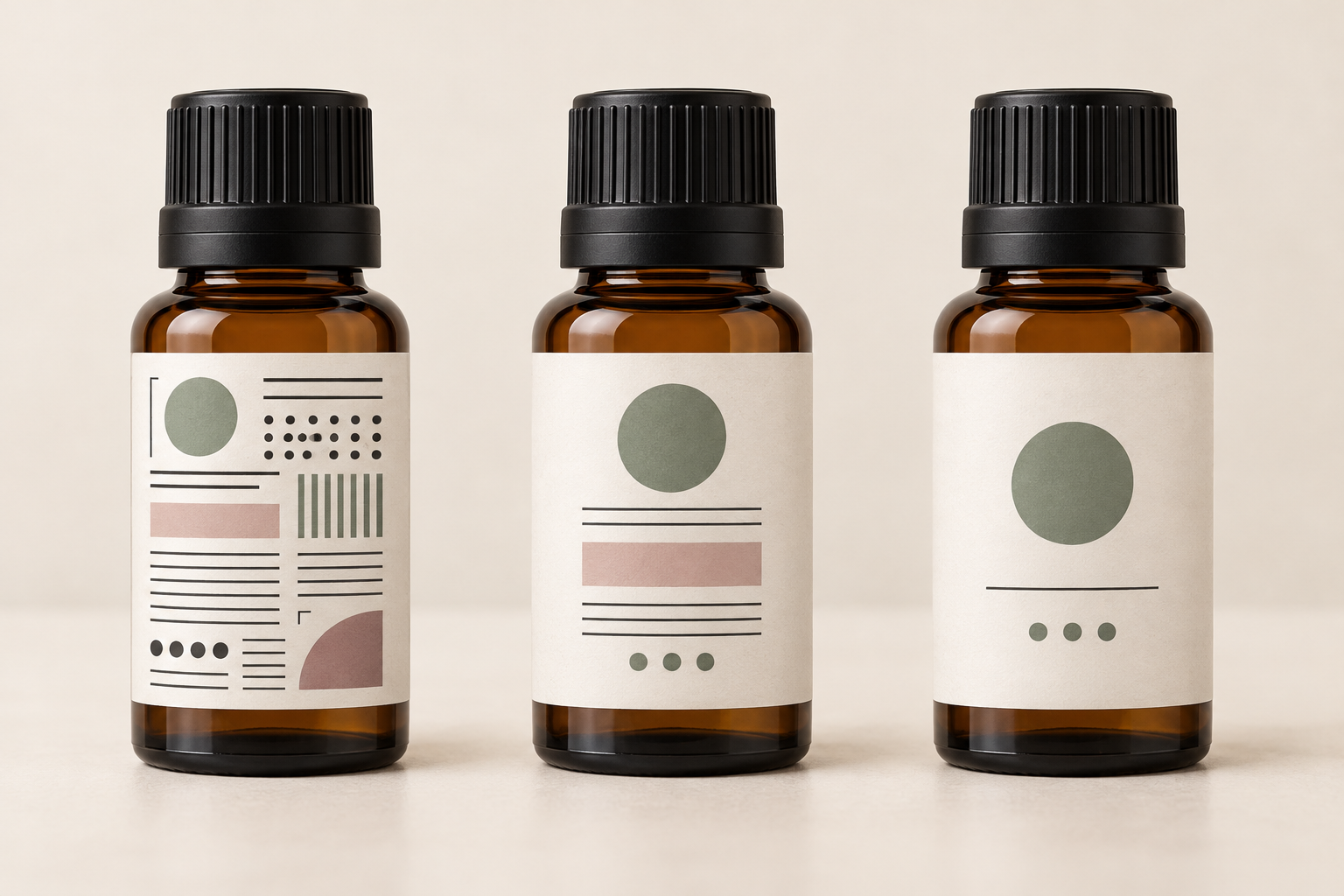
Use a Consistent Product-Line Design
A consistent label system makes a group of oils easier to recognize as one brand.
Keep elements such as these in consistent positions:
- Logo
- Oil name
- Botanical name
- Net contents
- Company information
Individual products can then be distinguished through controlled changes in color, illustration or accent graphics.
Avoid Extremely Small Type
Fitting more information onto a label does not help if customers cannot comfortably read it.
If the front label becomes crowded, consider a longer partial-wrap label, a second label or outer packaging instead of continually reducing the font size.
Barcodes and QR Codes on Essential Oil Labels
Small bottle size makes barcode and QR-code planning particularly important.
QR Codes
A QR code can connect a small package to information that does not fit comfortably on the bottle.
Potential uses include:
- Product information
- Usage instructions
- Batch information
- Reorder pages
- Videos
- Related products
Always test the printed QR code at its finished size before producing a full batch.
Barcodes
If the product will be sold through retail stores, plan barcode space before finalizing the artwork.
Do not squeeze a barcode into whatever space remains at the end of the design process. Keep the barcode readable, maintain sufficient surrounding space and test the printed code after the label has been applied to the bottle.
Essential Oil Labels for Roll-On Bottles
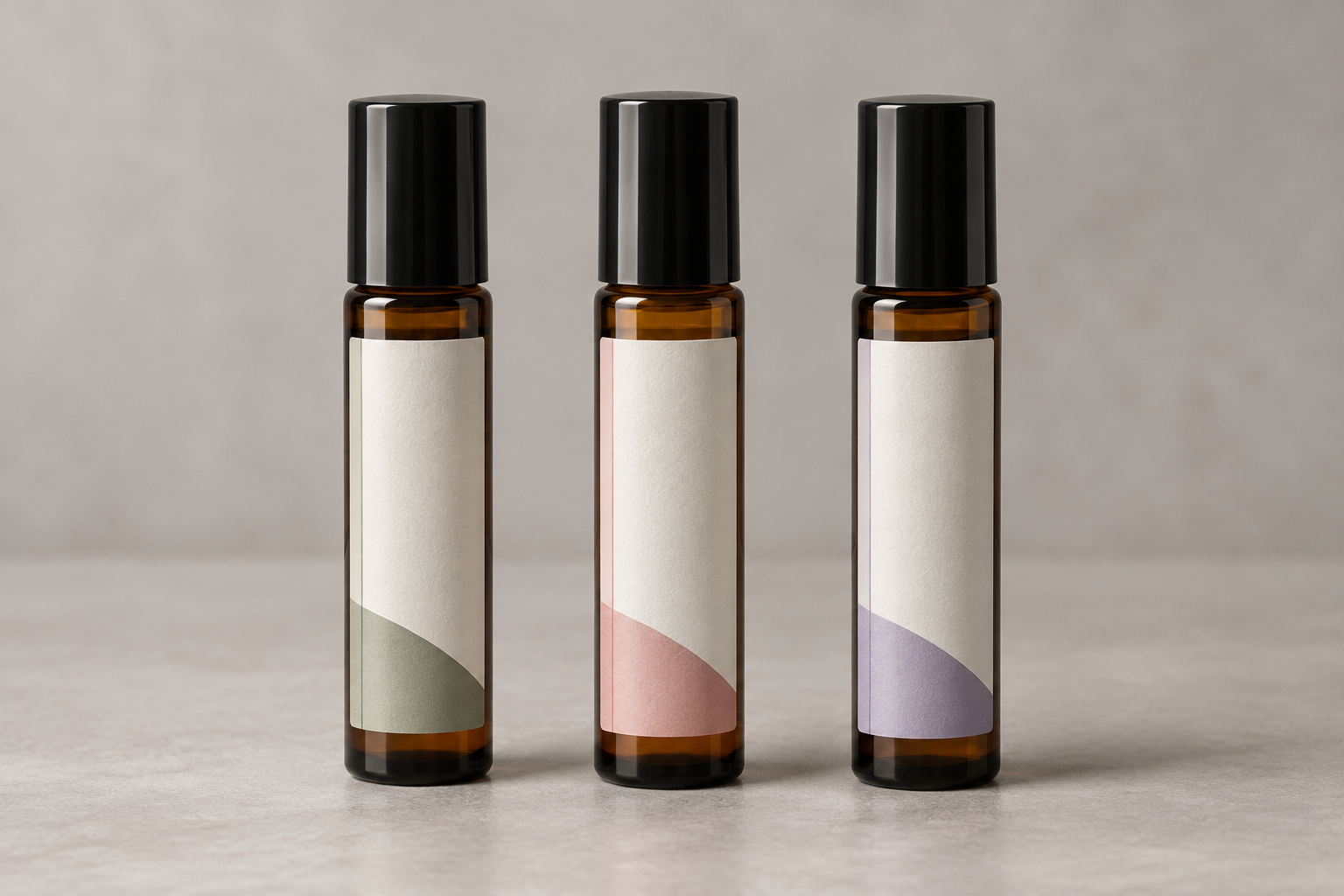
Roll-on bottles create a slightly different labeling challenge because they are usually taller and narrower than standard essential oil bottles.
A tall rectangular label often works well because it uses the vertical surface efficiently while keeping the label edges away from strong curves near the top and bottom.
Roll-ons are also frequently carried in purses, pockets, travel bags and cosmetic cases, so frequent handling should be considered when choosing the label material.
Common Essential Oil Label Mistakes
Choosing the Label Before Choosing the Bottle
Select the production bottle first whenever possible. Even two bottles advertised as the same capacity can have different usable labeling areas.
Using Every Available Fraction of Space
A label that exactly matches the maximum straight area can be difficult to apply consistently. Leaving a small amount of space around the label often creates a cleaner result.
Placing the Label Across the Bottle Shoulder
Label edges that extend onto strong curves are more likely to wrinkle or lift.
Assuming Water Resistance Means Oil Resistance
Water and essential oils are different exposures. Test the material, printed ink and adhesive with the actual product.
Using Text That Is Too Small
Prioritize information instead of continually reducing type size to fit more copy onto a small label.
Ignoring Printer Compatibility
For roll labels, verify the printer’s supported media width, core size, outside diameter, sensing method and roll orientation.
Skipping the Test Print
Always print several labels and apply them to actual bottles before beginning a production run.
What to Check Before Ordering Essential Oil Labels
Before placing an order, confirm:
- The actual bottle dimensions
- The usable straight-sided labeling area
- The desired label width and height
- Front, partial-wrap or near-wrap layout
- The material appropriate for the environment
- Printer compatibility
- Barcode or QR-code requirements
- The amount of text the design must accommodate
- Whether labels will be applied by hand or with equipment
A simple paper mockup and a few printed test labels can prevent expensive mistakes before full production begins.
Shop Labels for Essential Oil Bottles
LaserInkjetLabels.com offers blank sheet labels, blank roll labels and custom printed labels for essential oils, aromatherapy products, fragrance oils, roll-ons and related small-bottle applications.
Shop Blank Label Sheets
Print your own essential oil labels with a compatible desktop laser or inkjet printer.
Shop Blank Inkjet Roll Labels
Print labels using compatible roll-fed color inkjet label printers.
Custom Printed Essential Oil Labels
Have finished labels professionally printed and delivered ready to apply.
Find the Right Label Size
View the Essential Oil Bottle Label Size Guide
Free Label Templates
Use our templates to set up artwork and test common label dimensions.
Frequently Asked Questions About Essential Oil Labels
What size label is best for a 10 mL essential oil bottle?
A 1.5" × 2" rectangular label is a useful starting point for many 10 mL essential oil bottles. Bottle dimensions vary, so measure the straight-sided labeling area and test the size before ordering.
What size label fits a 5 mL essential oil bottle?
A label around 1.25" × 1.5" is a useful starting point for many 5 mL bottles. Compact bottles have limited flat surface area, so test the label on the actual container.
What size label works for a 15 mL bottle?
A rectangular label around 1.5" × 2.25" can work well for many 15 mL bottles. Other nearby sizes may fit better depending on the bottle manufacturer and design.
What size label works for a 30 mL essential oil bottle?
A 2" × 3" label is a useful starting point for many 30 mL bottles and provides additional room for branding and product information.
What material is best for essential oil labels?
The best material depends on the product and environment. Matte or semi-gloss paper can work for dry applications, while appropriate inkjet-compatible BOPP or other synthetic materials can provide greater durability where moisture, oil residue and frequent handling are concerns.
Should essential oil labels be waterproof?
Greater moisture resistance is useful for many essential oil products, but water exposure is not the only concern. Essential oils can affect materials differently, so test the label material, adhesive and printed ink with the actual filled product.
Are clear labels waterproof?
Not automatically. Clear material can create a premium no-label appearance, but whether it is waterproof or water-resistant depends on the specific material construction, adhesive and printing system.
Are sheet or roll labels better for essential oils?
Sheet labels are convenient for smaller production runs and compatible desktop printers. Roll labels are useful for higher-volume production with dedicated roll-fed label printers. Both can produce professional results when the material and printer are compatible.
Can I print essential oil labels myself?
Yes. Blank sheet labels can be printed with compatible laser or inkjet printers, while blank roll labels are designed for compatible roll-fed label printers.
Can I put QR codes on essential oil labels?
Yes. QR codes can be useful for linking customers to product information, instructions, videos or reorder pages. Test the printed code at its final size before production.
Can I print barcodes on essential oil bottle labels?
Yes. Plan barcode placement early in the design, maintain adequate surrounding space and test the printed barcode after the label has been applied to the actual bottle.
What is the best label shape for essential oil bottles?
Rectangular labels are generally the most practical choice because they use the narrow bottle surface efficiently. Small round labels can also be useful for caps, lids or promotional seals.
How do I prevent essential oil labels from wrinkling?
Keep the label within the straight-sided portion of the bottle and avoid extending its edges onto the curved shoulder or bottom radius. Choosing a slightly smaller label can also make application easier.
How can I test an essential oil label size before ordering?
Print the proposed dimensions on ordinary paper at 100% scale, cut out the shape and position it on the actual bottle. You can also use our free label templates to test common sizes.
Where can I find more essential oil bottle label sizes?
Visit our complete Essential Oil Bottle Label Size Guide for additional size recommendations and measuring guidance.